What 100+ Locations Reveal About Derby Audiences
By Alex Schoettmer, Brand Director
Every year, brands plan for the Kentucky Derby by focusing on what’s happening at Churchill Downs. But Derby isn’t just a race, it’s a citywide behavioral shift.
When we analyzed foot traffic across more than 100 locations in Louisville – spanning several venue categories – a clearer picture emerged. Derby is defined by how people move across the city, not just where the race happens. For marketers, that movement creates a set of opportunities that extend well beyond race day.
Here’s how we approached it: To better understand consumer behavior during Derby season, we analyzed visitation data from over 100 locations across Louisville using our location intelligence platform, Unacast. We grouped locations into six categories: Hotels, Restaurants, Bars, Attractions, Grocery stores and Liquor stores. And we reviewed patterns from Q1 2022 through Q2 2026 to identify consistent trends across time. The goal wasn’t to measure how busy Derby season is, it was to understand how demand builds, where it concentrates, and how consumers move.
And here’s what we found:
1. Brands Should Plan for Derby as a Multi-Week Ramp
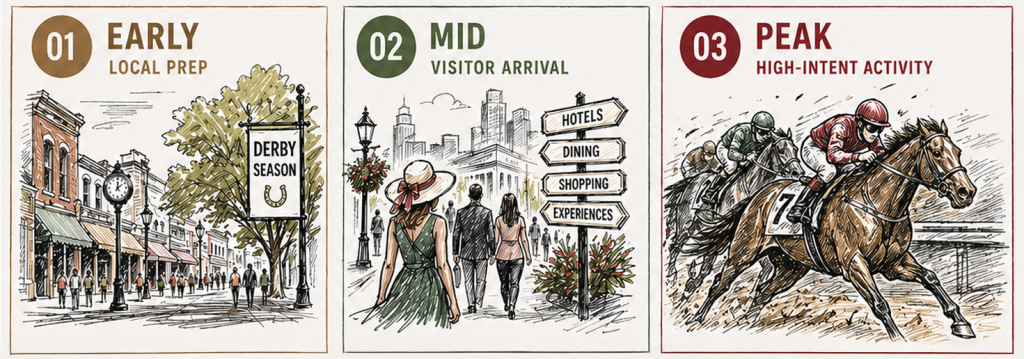
Derby demand builds well before race weekend. Across hotels, attractions, and dining locations, visitation begins increasing ahead of Derby, while grocery and liquor retail activity indicates that local preparation starts even earlier. Demand builds in stages, not all at once.
What brands should do: Plan campaigns to activate in phases: early (local prep), mid (visitor arrival), and peak (high-intent activity)
2. Brands Should Segment Derby Audiences by Behavior
Derby audiences are not uniform. They fall into distinct behavioral groups: tourists, social/nightlife audiences, and locals preparing or hosting
What brands should do: Tailor messaging, timing and targeting to each group.
3. Brands Should Activate Beyond Churchill Downs
Consumer activity extends across the city, especially in dining, nightlife and cultural districts.
What brands should do: Expand targeting to high-traffic zones beyond the racetrack.
4. Brands Should Align With Local Culture, Not Just the Event
Locations tied to Louisville’s identity – particularly cultural and bourbon-related destinations – act as anchors in visitor behavior. Visitors’ stops before and after their hotel indicate the demand to experience Louisville culture.
What brands should do: Connect campaigns to local culture and experiences.
In Conclusion
Derby is shaped by how consumers move across the city. Brands should plan in phases, segment audiences, expand targeting, align with culture, and execute with precision timing. And those that understand how people behave – not just where they gather – are best positioned to win during the Derby season.
To learn how BCH can apply similar location-based data to your marketing communications strategies, email partners@bch.com.
 Previous Post